
Picking the Right Walk-In Shower for Your Bathroom
"Walk-in shower" sounds simple — but there are actually five different types, and choosing between them changes your bathroom's look, feel, and how it works for the people who use it. Get it right and you have a shower you'll love for decades. Get it wrong and you're remodeling again in five years.
This guide walks through every type of walk-in shower we install, who each one is best for, and the decisions you should be thinking about before you call a contractor.

The 5 Main Types of Walk-In Showers
Most walk-in showers fall into one of five categories. Each has a different look, price point, and best-fit homeowner. Here's how they compare.
Standard Walk-In Shower
The classic walk-in shower: a low step-up entry, a fixed shower base, and walls in acrylic, tile, or solid-surface. Often replaces an existing tub or shower in the same footprint.
Low-Threshold Walk-In Shower
A walk-in shower with a smaller, lower step-up than the standard — usually 2 to 4 inches. Easier to step into for anyone with mobility limitations, while still containing water with a small lip.
Curbless / Barrier-Free Shower
No threshold at all. The shower floor sits flush with the bathroom floor, allowing wheelchair, walker, or rolling chair access. Requires careful drainage design and usually a sloped subfloor.
Walk-In Shower & Tub Combo
A walk-in shower paired with a separate soaking tub in the same bathroom. Lets you have the daily convenience of a walk-in shower without losing tub access for resale or relaxation.
Custom Designer Walk-In Shower
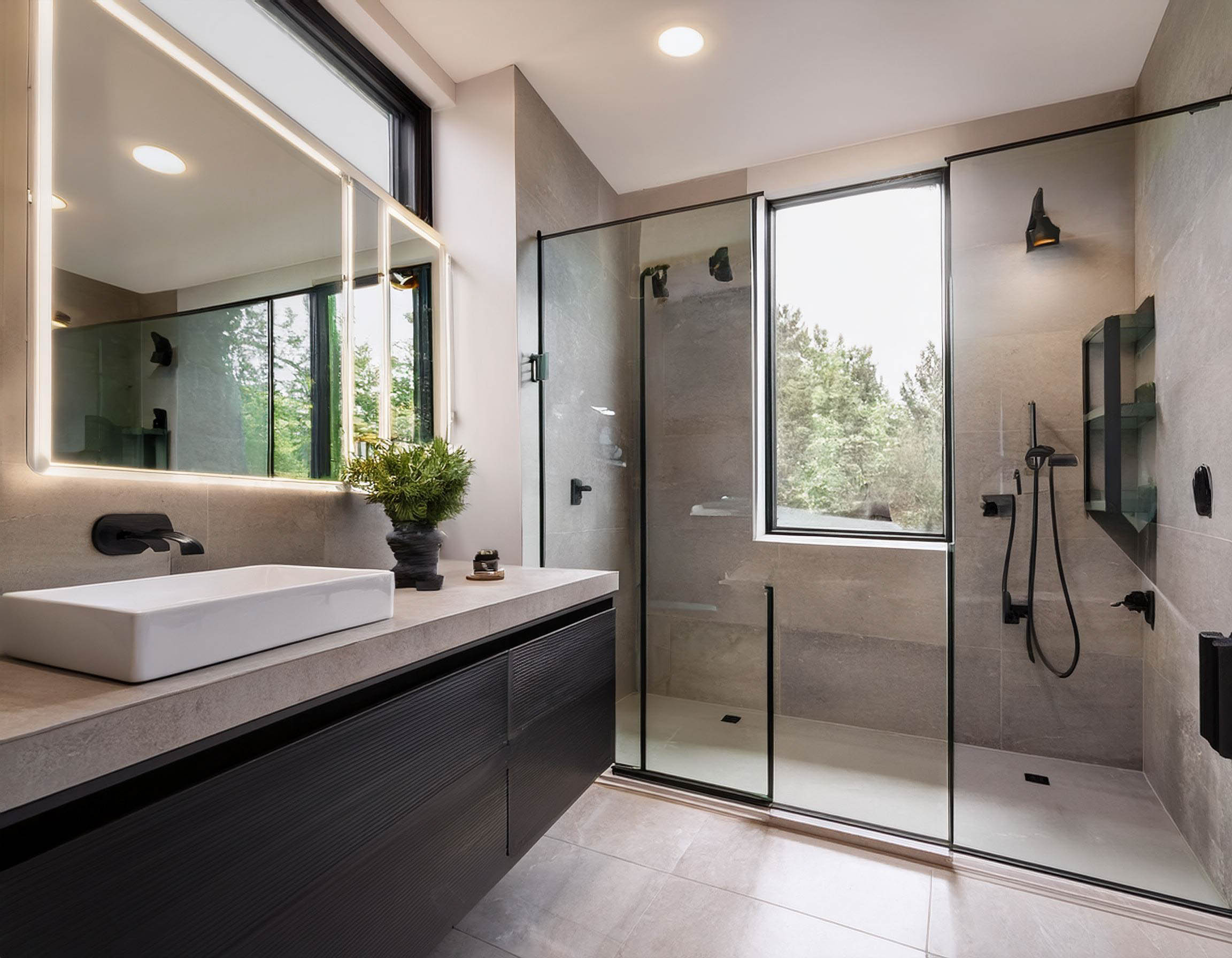
Fully custom design with premium tile or natural stone, frameless glass, multiple shower heads (rain, handheld, body sprays), built-in benches, niches, and possibly a steam feature or heated floor.
Wet Room Style Walk-In Shower
A doorless or open-style walk-in shower where part of the bathroom doubles as the shower area. Often paired with curbless design and large-format tile that flows from floor to wall.
How to Choose the Right Type for Your Home
Picking a type isn't really about preference — it's about matching the right shower to your bathroom, your household, and your future plans. Use this matrix to narrow down quickly:
| If your top priority is... | The best fit is usually... | Why |
|---|---|---|
| Replacing an old tub or shower fast | Standard walk-in shower | Fits the existing footprint, can be installed in as little as one day, predictable cost |
| Aging in place safely | Low-threshold or curbless | Reduces fall risk and supports independent bathing as mobility changes |
| Wheelchair or walker access | Curbless / barrier-free | Only option that allows full rolling access into the shower |
| Keeping resale value (only bathroom in the home) | Shower & tub combo | Buyers (especially families) often want at least one bathtub somewhere in the home |
| A spa-like primary bathroom | Custom designer walk-in shower | Allows full personalization of finishes, fixtures, and features |
| Modern, minimalist aesthetic | Wet room style | Open, doorless design creates visual flow; works especially well in smaller bathrooms |
| Lowest cost, fastest install | Standard walk-in shower with acrylic walls | Pre-formed acrylic systems are the most efficient option to install and maintain |
If your bathroom and household fit more than one row, that's normal — most homeowners weigh two or three priorities at once. A good design consultant can walk you through the trade-offs in person.

Materials That Pair With Each Type
The shower type sets the layout — but the materials set the look, the maintenance load, and the lifespan.
Acrylic Wall Systems
Pre-formed panels in solid colors or patterns. Grout-free, low-maintenance, fast to install, and the most affordable. Pairs perfectly with standard and low-threshold types.
Sentrel Solid-Surface Panels
Premium solid-surface panels that mimic the look of natural stone or tile without the grout lines. A step up from acrylic in both look and price. Works with any shower type.
Custom Tile
The traditional luxury choice. Most flexible visually but requires grout maintenance over time. Best fit for designer, custom, and wet room styles.
For a deeper comparison, see our breakdown of Sentrel vs. tile vs. acrylic shower walls.
Door & Enclosure Options
The door you pick affects how the shower feels day-to-day — how easy it is to clean, how much light passes through, and how the bathroom flows. Here are the main options:
Sliding Glass Doors
Two panels that slide horizontally. Save space in tight bathrooms but the tracks need regular cleaning.
Swinging Glass Doors
A single hinged panel. Cleaner look, easier to clean, but needs swing space outside the shower.
Frameless Glass
Thicker glass with minimal hardware. Modern, premium look. More expensive but easier to maintain.
Semi-Frameless Glass
The middle option — some metal framing for support but a cleaner look than fully framed enclosures.
Curtain & Rod
Most budget-friendly. Easy to swap out. Works fine with standard walk-in showers if you want to keep things simple.
Doorless / Open
No door at all — relies on shower geometry to contain water. The wet room look. Requires careful planning.
Not Sure Which Type Fits Your Bathroom?
Our design consultants come to your home, look at your space, and recommend the right walk-in shower type for how you actually live. No pressure, no obligation.
Schedule My Free Consultation
Common Mistakes to Avoid
The regrets we hear from homeowners — sometimes from our own customers, sometimes from people calling us to fix what someone else did — usually fall into a few categories. Avoid these and you'll be ahead of most.
Going curbless without proper waterproofing
Curbless showers are beautiful but require sloped subfloor work and serious waterproofing. Skipping that is the fastest way to ruin a bathroom.
Choosing tile when you hate cleaning grout
Tile looks great in photos, but if you're not realistic about maintenance, you'll be unhappy in two years. Acrylic and Sentrel exist for a reason.
Eliminating the only tub in the home
If you only have one bathroom and you're staying long-term, no problem. But if you might sell, families with young kids will skip a tubless home.
Forgetting about ventilation
Bigger showers create more moisture. Make sure your fan is sized correctly, especially in wet room and curbless designs.
Skimping on the door
You'll touch the door every day. A cheap track that sticks or rusts will outlive its welcome fast.
At Five Star Baths, we install BCI Acrylic systems backed by a lifetime warranty — so the materials, the workmanship, and your peace of mind are all covered for as long as you own the home.
Questions to Ask Before Hiring a Contractor
Once you know what type of walk-in shower you want, the next decision is who installs it. Here are the questions worth asking before you sign anything:
- Do you specialize in bathroom remodeling, or is it one of many trades you handle?
- What materials do you install, and who manufactures them?
- Can the install be completed in one day, or will it take longer?
- Are your installers factory-certified for the products you use?
- What does your warranty cover — materials only, or workmanship too?
- How do you handle permits and inspections in my town?
- What happens if you find water damage or rot once the old shower comes out?
- Can I see photos of recent installs in homes like mine?
Five Star Baths handles all of these questions clearly and upfront — and our team specializes only in bathroom remodeling, which means our installers see hundreds of walk-in showers a year. Learn more about our walk-in shower installations or contact us directly with your questions.
Frequently Asked Questions
What's the difference between a walk-in shower and a regular shower?
A walk-in shower has a low or no-threshold entry — you walk in, rather than stepping over a high tub wall or basin. They're often larger, more accessible, and easier to clean than traditional showers. Most modern walk-in showers also feature glass enclosures or open designs instead of curtains.
How much does a walk-in shower cost?
Costs depend on the type you choose, materials, size, and any accessibility features. Because every bathroom is different, the best way to get an accurate price is a free in-home consultation — request your quote here and we'll give you a detailed estimate.
Are walk-in showers good for resale value?
Generally yes — walk-in showers are highly desirable for buyers, especially modern ones with glass enclosures and accessibility-friendly designs. The one caveat: if you're eliminating the only tub in the home, families with young children may skip the property. If you have at least one other bathroom with a tub, walk-in showers are a strong value-add.
Can a walk-in shower be installed in a small bathroom?
Absolutely. Most walk-in showers need at least 30" x 30" of space, and many small bathrooms actually feel larger after a tub is replaced with a walk-in shower. Wet room and standard styles are particularly good for compact spaces.
What's the most low-maintenance walk-in shower?
Acrylic wall systems are the lowest-maintenance option. They're grout-free, non-porous, and resist mold, mildew, staining, and scratching. A simple wipe-down keeps them looking new — no scrubbing, no resealing.
How long does it take to install a walk-in shower?
Standard and low-threshold walk-in showers using acrylic wall systems can be installed in as little as one day. Curbless, custom tile, and wet room designs take longer because they involve more structural work and material curing time.
Can you add accessibility features to any type of walk-in shower?
Yes. Grab bars, built-in benches, handheld shower wands, and anti-slip flooring can be added to nearly any type. For full wheelchair accessibility, you'll need a curbless or barrier-free design. See our ADA-compliant bathroom remodeling options.
What's the warranty on a Five Star Baths walk-in shower?
Every walk-in shower we install comes with a lifetime warranty on both the BCI Acrylic materials and our workmanship. That means you're covered for as long as you own the home.
Ready to Find the Right Walk-In Shower?
Schedule a free in-home consultation and we'll help you choose the type that fits your bathroom, your budget, and the way you actually live.
Get My Free Consultation Or call us directly at (978) 778-3904


